Coming to a Theatre Near You… The Studio Using AI to Protect Human Creativity
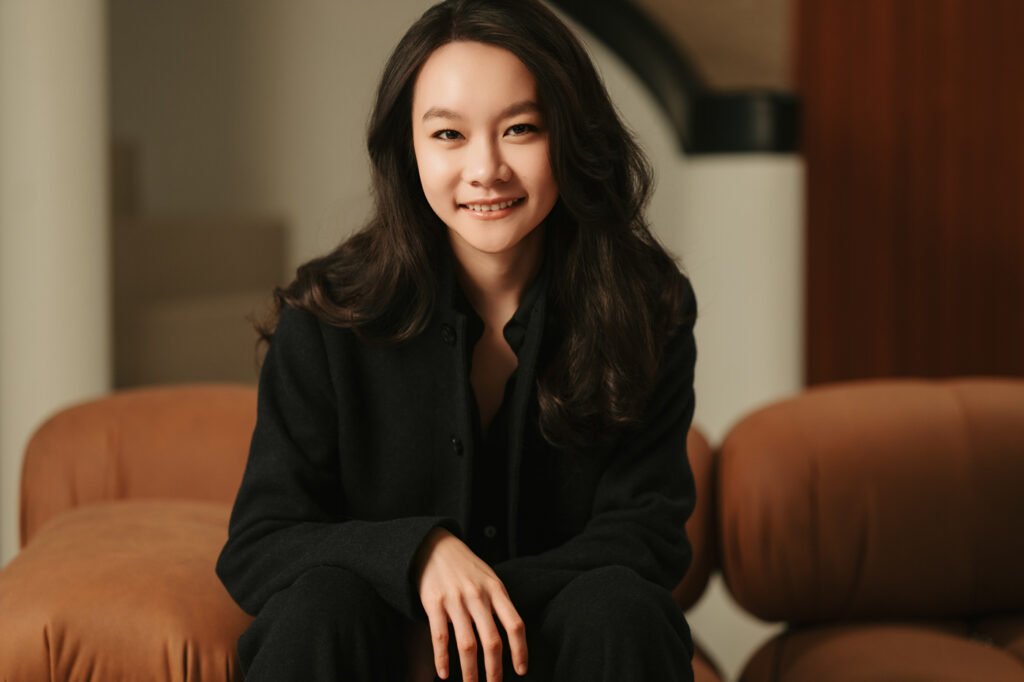
Utopai Studios is reframing AI in filmmaking, not as a tool to replace humans, but as an engine that enhances production while keeping creative authority firmly in human hands. CEO Cecilia Shen argues that most AI video tools fall short because they produce short, disconnected clips, while Utopai focuses on full-length, editable storytelling with consistency and control. Utopai is more of a cinematic workflow system than a simple prompt-to-video app. It stands out by tying the tool to an entertainment studio and original IP pipeline, which shows a broader strategy than just selling software to users. It is in a smaller but more premium niche alongside tools aimed at professional pre-production and production use.
AI video faces major controversy from Hollywood to Dubai, it is all about job displacement, copyright and actor likeness rights, deepfake misuse, and the “soulless” quality of AI-generated content. Unions and regulators worry about ownership, consent, and fair compensation, while creators fear loss of artistic integrity. In the Gulf, concerns also include cultural authenticity and control of local narratives. Utopai addresses this by keeping humans at the center; AI acts as a production crew, not a replacement. It enables ethical, consent-based use of likeness, supports long-form storytelling with creative control, and democratizes high-quality production, empowering regional creators while preserving human-led storytelling. I’ve covered technology long enough to remember in 1996 when a $500,000 Silicon Graphics workstation was the future. Three days of rendering, with fingers crossed to get 3 minutes of footage. We thought we were witnessing a revolution. And we were, just a much slower one than the brochure suggested.
So when Cecilia Shen, CEO of Utopai Studios, told me that a filmmaker today needs nothing more than a laptop and a plain-English description to generate unlimited, studio-quality long-form content, my first instinct was to reach for the caveats. I’ve heard versions of this pitch before. Usually, the demo looks better than the product, and the product looks better than the business. But Shen is not a typical founder, and Utopai is not a typical AI company. The more she talked, the more I found myself leaning forward. She opened with something that stuck with me. “Every other model — Sora, Cling — stops at 30 seconds. That’s not storytelling. That’s a GIF.” It’s a throwaway line, but it landed. Because she’s right. I’ve played with most of the major AI video tools. They’re impressive in the way that a magic trick is impressive , until you realize the magician can only do the one trick. You get a beautiful clip. Atmospheric, even cinematic. And then it ends, and you’re left wondering what you’re supposed to do with it.
Utopai’s answer is to keep going. Unlimited length, generated from a single prompt or a full script. But Shen was insistent that length was almost beside the point. “Directors can say, ‘The lighting is wrong at second 47,’ and the model adjusts. You don’t just generate clips. You edit stories.” That’s the part that genuinely surprised me. Not the length. The control with consistency in every scene and he idea that this is a production environment, not a vending machine. You could try that here https://pai.utopaistudios.com, but plan well and be prepared before you use your costly credits. Its structured pipeline, from characters, storyboard, rendering, to AI editing, offers creative control that I think is very rare in current AI video tools. From continuity control to character identity to audio normalisation, directors would surely love it. And costs of production would be way less than the current stratospheric budgets we hear about. I asked her about the Huace deal , the revenue-share partnership with the world’s largest TV production hub announced just last week. I expected a polished answer on the deal that is about halfway through, and about ‘synergies and strategic alignment’. Instead, she cut straight to the anxiety underneath it. “Studios are terrified of replacing human soul. We tell them: AI handles execution. Humans keep the story.” She’s thought carefully about why the industry resists this technology, and her diagnosis is sharper than most. It’s not fear of the new, she argues. It’s a legitimate aesthetic response to bad product. She cites a Chinese company that recently announced AI actors has also seen its stock price fall approximately 97% from its historical peak over time. The market didn’t punish the idea and the execution, the uncanny valley of it, the sense that something human had been quietly removed and nobody told the audience
Utopai’s counter-move was to build a studio, not just a model. Every partner gets a creative team embedded alongside the technology for quality control. It’s a more expensive way to operate. It’s also, she believes, the only way to earn trust. Sitting there listening, I thought she might actually be right about that. I even asked he ‘Could Utopai make The Godfather Part IV’ She laughed “The day a model spontaneously generates something like that, it passes the Turing test.” But then she said something that reframed the whole conversation for me. She doesn’t want to make The Godfather Part IV. She wants to make ten shows from ten regions for the same budget. From Brazil to Saudi Arabia and the UAE. Places with stories the world hasn’t heard yet, from filmmakers who’ve been locked out not by lack of talent but by lack of infrastructure. I’ve heard the democratization argument before. Usually it’s theoretical. When Shen says it, she’s describing deals already in progress, regions already in conversation.
It felt less like a vision statement and more like a pipeline. I wanted to know where she draws the line, because everyone in this space claims to have one. “Booking a young celebrity’s face without their consent for scenes they’d reject — that’s theft.” She didn’t pause before saying it. “AI should open opportunities, not steal them.” The ethical use, in her view, is specific and narrow: de-aging a performer for a biographical role they’ve agreed to. She’s not interested in grey areas. She also extended the same logic to writers, and this is where she said the thing that has stayed with me since the call ended. “The moment you replace writers with prompts, audiences will revolt.” Not because audiences are sentimental. Because they can feel it. The absence of a human hand, she believes, registers — even if viewers can’t articulate why. It shows up as a vague dissatisfaction, a sense that something is slightly off. She’s betting her company on the idea that this instinct is durable. I think she might be right about that too. Have A Script will get A Film Near the end of our conversation, she said something simple that I keep coming back to. “Just a phone or a laptop. Describe what you want in plain English. The model becomes your crew.” I’ve interviewed a lot of people who want to democratize things.
Access to capital, access to education, access to markets. The pitch is usually more complicated in practice than it sounds in theory. But filmmaking has always had a specific cruelty to it — the gap between the person with the story and the person with the resources to tell it has been enormous, and largely unbridgeable. If Utopai is even half right, that gap is closing faster than anyone in Hollywood is comfortable admitting. Shen is already in conversations about regional expansion in the Middle East. The technology is already running in Hollywood across pre-visualization, scene design, and post-production. The revolution, if that’s what this is, isn’t coming. It’s already on set. I left the interview still skeptical about some of the claims. But less skeptical than when I arrived. Which, for a tech journalist who’s seen a lot of demos, might be the most honest thing I can say.