
Efficiency or Elimination? How AI is Quietly Rewriting the Rules of the 2026 Job Market
The whispers in the boardrooms have finally become screams in the headlines. Amazon recently announced 16,000 corporate layoffs—its third massive round in recent years.
The Great Corporate Reset: Why Your Next Job Won’t Be a Job Title
The whispers in the boardrooms have finally become screams in the headlines. Amazon recently announced 16,000 corporate layoffs—its third massive round in recent years. If you think this is just an “Amazon problem,” it’s time to wake up. As someone who has spent 25 years in the trenches of executive recruitment, dealing with CEOs and hedge funds, I can tell you: we are witnessing a systemic shift in how corporate America functions.
The “tea” is officially spilled. We aren’t just in a tough market; we are in the middle of a fundamental reset of the American workforce.
The Rise of the “No Hire, Low Fire” Economy
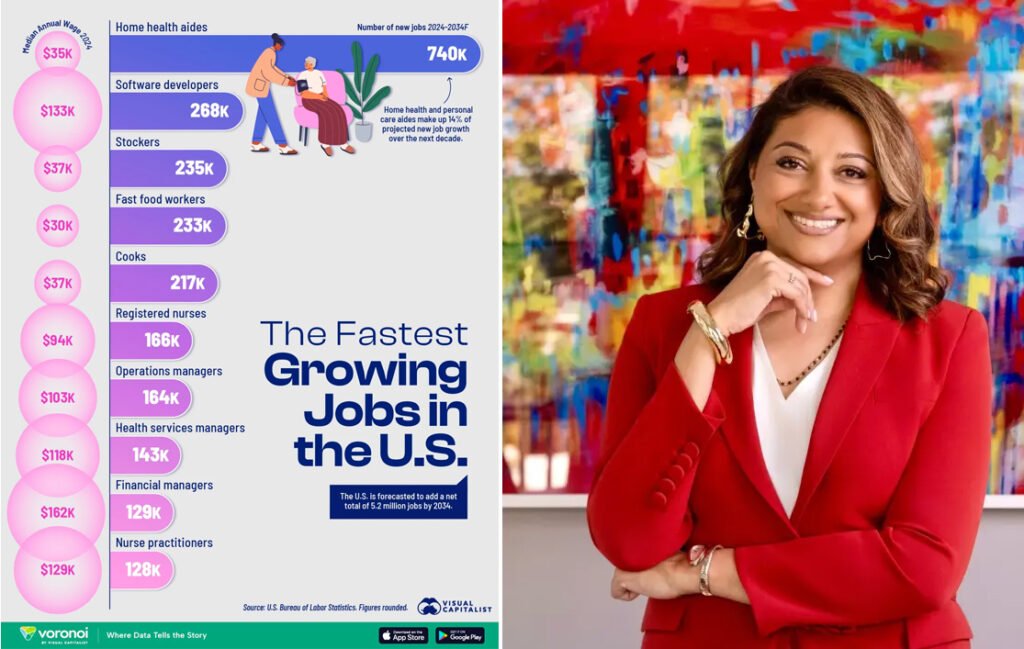
The data is staggering. In 2025, the U.S. labor market slowed to a crawl, adding an average of only 49,000 jobs per month. To put that in perspective, 2024 saw 168,000 jobs per month. Outside of a global recession, this is the slowest pace of growth in over two decades.
Economists are calling this the “no hire, low fire” economy. Companies aren’t collapsing in massive, theatrical waves, but they are “quietly trimming.” They are waiting. They are hesitant. And while the unemployment numbers might look stable on paper, the private sector—excluding healthcare and hospitality—is effectively stalled. If you aren’t in healthcare, the growth is near zero.
The Translation: It’s Not “Bureaucracy,” It’s AI
When Amazon CEO Andy Jassy says the company is “removing bureaucracy,” let me translate that for you from Recruiter-speak: They are flattening layers. They are removing middle management and replacing those functions with generative AI. For years, we talked about AI as a “productivity tool” to help us work faster. Today, it is a replacement tool. While companies like Intel, Microsoft, UPS, and Nestle cut thousands of roles, they are simultaneously spending billions on AI infrastructure.
Companies are testing a theory in real time: How many humans can we replace with technology before the machine breaks? We are the test subjects.
Who is Getting Hit?
The “Slow Lane” job market is creating a bottleneck that impacts three specific groups:
- Young Workers: Entry-level roles are evaporating as automation takes over basic tasks.
- Middle Management: The “bureaucracy” being cut is often the experienced middle-tier.
- Career Pivoters: When companies have seven-interview cycles for a single seat, they aren’t taking risks on outsiders. They want “perfect” fits with immediate ROI.
How to Survive the Reset: The Portfolio Career
If you are waiting for the “gold rush” of 2021 to return, stop waiting. It isn’t coming back. To thrive in 2026 and beyond, you must stop thinking in job titles and start thinking in skills and outcomes.
I am advising all my candidates to move toward a Portfolio Career mindset. Here is your survival toolkit:
- Ditch the Title, Sell the Narrative: Don’t tell me you’re a “Marketing Manager.” Tell me how you drove $2M in revenue using automated workflows. Prove your business impact.
- AI Literacy is Non-Negotiable: You don’t have to be a coder, but you must be “AI-fluent.” If you can’t demonstrate how you use AI to do your job 10x faster, you are a liability to a company’s bottom line.
- Build a Visible Personal Brand: In a market with fewer seats, visibility is leverage. If I can’t find your expertise online, you don’t exist to a recruiter.
- Optionality over Loyalty: Don’t depend on one employer. We are seeing a massive rise in “consulting collectives”—small, elite teams of experts winning projects that used to go to giant firms.
The Bottom Line
This isn’t about fearmongering; it’s about career literacy. The corporate truth is that the “slow lane” is the new reality. Companies are leaning out, and the traditional path of climbing a vertical ladder is crumbling.
The ladder is gone. It’s time to start building your own platform.