
Startup PinkDetect Uses AI to Close the Breast Cancer Detection Gap in Undeserved Communities
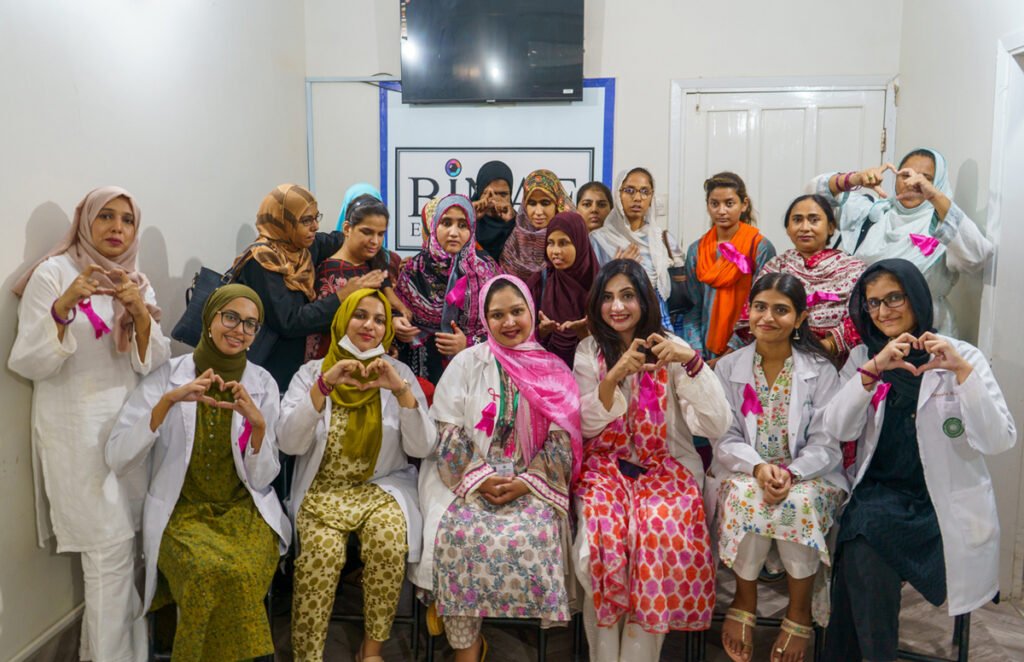
PinkDetect, a Pakistani health-tech startup, has built an AI-powered breast health platform designed to bring early cancer detection to underserved women across South Asia and East Africa — and its co-founder has now been named to Inc. Magazine's Female Founders 500 list for 2026.
PinkDetect, a Pakistani social enterprise, has developed an AI-powered mobile platform aimed at making early breast cancer detection accessible to women in communities where healthcare infrastructure is limited and cultural stigma often prevents open discussion of the disease.
The startup’s co-founder, Suha Suleman Lalani, was named this week to Inc. Magazine’s Female Founders 500 list for 2026, one of the most prominent recognitions in global entrepreneurship. The Problem the Platform Addresses In Pakistan and across much of the developing world, breast cancer is frequently diagnosed at a late stage, significantly reducing survival outcomes. Access to screening is limited by geography, cost, and social barriers. PinkDetect was built to address this gap directly, using technology to deliver detection tools and health guidance to women who would not otherwise have access to them. The platform uses AI to power a personal health dashboard that tracks individual risk indicators, guides users through breast self-examination, and provides culturally adapted educational resources.
The system also uses location data to surface nearby clinics, connecting users to in-person care when needed. How the AI Layer Works Rather than offering static health content, PinkDetect’s platform is designed to respond to individual user data. The AI component processes inputs from self-reported health information and examination records to identify patterns associated with elevated risk, enabling earlier intervention. The platform is built to function in low-connectivity environments, a deliberate design decision given the infrastructure realities of its target markets in Pakistan, India, Bangladesh, and parts of East Africa. Co-founder and CEO Solmaz Ebrahimi-Iranpour described the platform’s approach as evidence-based and equity-driven. “Everything we build is grounded in evidence, equity, and real community need, so that our work translates into meaningful impact,” Ebrahimi-Iranpour said. “This means designing systems that empower women with practical tools, measurable outcomes, and access to care that feels safe and culturally respectful.” Origins of the Platform Lalani began developing the concept while studying Biomedical Sciences at Toronto Metropolitan University in Canada, where her research focused on late-stage cancer detection in developing countries. After losing someone close to breast cancer, she and a classmate launched a breast self-examination simulation during Pinktober 2023.
The campaign reached women across four countries and revealed demand for tools that went beyond awareness into active, personalized health management — the insight that led directly to PinkDetect. “Breast cancer outcomes should not depend on where a woman lives or what resources she has access to,” Lalani said. “PinkDetect was created to help close this gap and bring earlier, more accessible detection to communities that have historically been underserved.” Recognition and reach PinkDetect is now approaching its third year of operation. Lalani previously worked as a Generative AI Specialist at Microsoft in the Healthcare and Life Sciences sector and is currently completing a Master of Public Health at Harvard University on scholarship. The startup has been recognized by the Western Union Foundation Fellowship, the Roddenberry Foundation Catalyst Grant, Harvard Innovation Labs, and USA Today, in addition to the 2026 Inc. Female Founders 500 designation.