
Invest, cut, or raise: the three decisions that define a CFO
A CFO's true role extends far beyond basic accounting and tracking spend—it is defined by how they allocate finite capital under genuine uncertainty. Stripping away day-to-day compliance, a finance leader’s ultimate impact hinges on mastering three critical decisions and their timing.
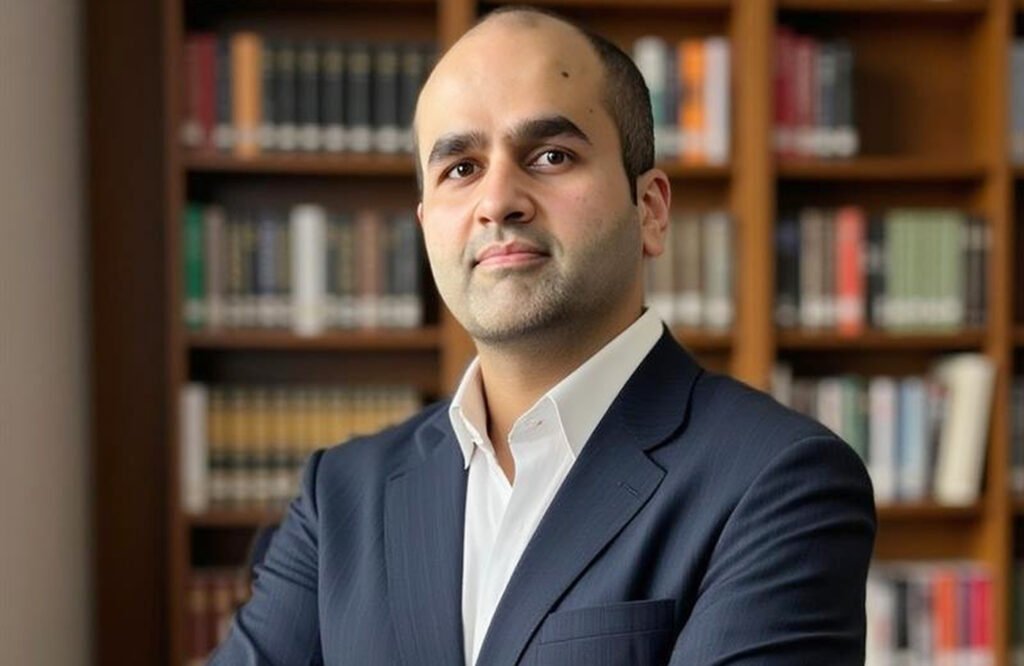
By Zaid Aboobaker, Founder & CEO, CompassPoint Consulting
There is a common misconception about what a finance leader actually does. People imagine the job is about counting the money. Producing the accounts, tracking the spend, reporting the numbers. That work matters, but it is the foundation. The real job of a CFO sits a layer above. It is the allocation of finite capital under genuine uncertainty.
Strip away the reporting and the compliance and the day-to-day, and the role reduces to three decisions. When to invest. When to cut. When to ask for more. Every significant financial choice a growing business makes is a version of one of these three. Getting them right, and getting the timing right, is what really matters.
The three decisions…
- When to invest
Investment is the decision to deploy capital ahead of certainty, in the belief that it will generate a return. More headcount. A new market. A product line. The difficulty is never whether the opportunity is attractive. Most opportunities look attractive. The difficulty is whether this opportunity, at this moment, deserves capital that could go elsewhere or stay in reserve. A good investment decision is always a comparison, not a yes or no.
- When to cut
Cutting is the hardest of the three, because it usually means admitting something is not working. A division that has not delivered. A client relationship that absorbs more than it returns. A cost base that has grown faster than the revenue beneath it. The instinct is to wait, to give it another quarter. Discipline is the willingness to cut while the decision is still a choice rather than a necessity.
- When to ask for more
Raising capital is a decision about both need and timing. The best time to raise is rarely the moment of greatest need. It is the moment of greatest strength, when the business does not look desperate and can negotiate from a position of confidence. A sophisticated investor can always tell the difference between a business raising from strength and one raising because it has run out of road. The terms reflect that difference.
Liquidity gives you the options. A framework makes the choice.
Cash is what makes all three decisions possible. With liquidity, a business has options. Without it, the choices get made by circumstance rather than judgement.
But liquidity alone does not tell you which option to take. That requires a framework. What return threshold justifies an investment? What does sustained underperformance look like, defined in numbers rather than feeling? What level of runway is the floor below which raising becomes non-negotiable? These thresholds turn three difficult judgement calls into disciplined decisions.
Timing is the hardest variable
In my experience, the amount is rarely the hard part. A competent finance team can model how much capital a given plan requires. The genuinely difficult question is always timing. Invest too early and you burn capital before the conditions are right. Too late and a competitor has taken the ground. Cut too soon and you kill something that needed more time. Too late and the cost has already done its damage.
Timing cannot be fully modelled. It requires data, but it also requires judgement built from experience. This is precisely the part of the job that cannot be automated, and precisely why senior financial judgement remains valuable no matter how good the tools become.
This is the heart of what we do as fractional CFOs. We give founders the reporting and forecasting infrastructure to see the options clearly, delivered through technology that makes the picture faster and sharper than traditional finance support allows. Then we bring the judgement to help frame the decision itself.
Most growing businesses cannot justify a full-time CFO at the stage when these three decisions start to carry real weight. That is exactly the gap a fractional model fills. CFO-level judgement on the decisions that matter, without the full-time cost.
The amount of money is a calculation. Where to deploy it and when to pull back is a decision. The first can increasingly be handled by a machine. The second is, and will remain, the defining work of a finance leader.
About the author: Zaid Aboobaker is the Founder and CEO of CompassPoint Consulting, bringing more than 20 years of experience across the Middle East, India, and Europe. A CIMA Fellow and CGMA, he specialises in growth, transformation, M&A and finance leadership, helping businesses scale sustainably through sharper strategy, stronger systems and operational discipline globally.